
ADDITIONAL ITEMS · SALES ENABLEMENT
Give your sales team the goods.
Marketing gets them in the room. This is what wins the room: the one-pager, the deck, the answer to the competitor question, and a CRM your team will actually use.
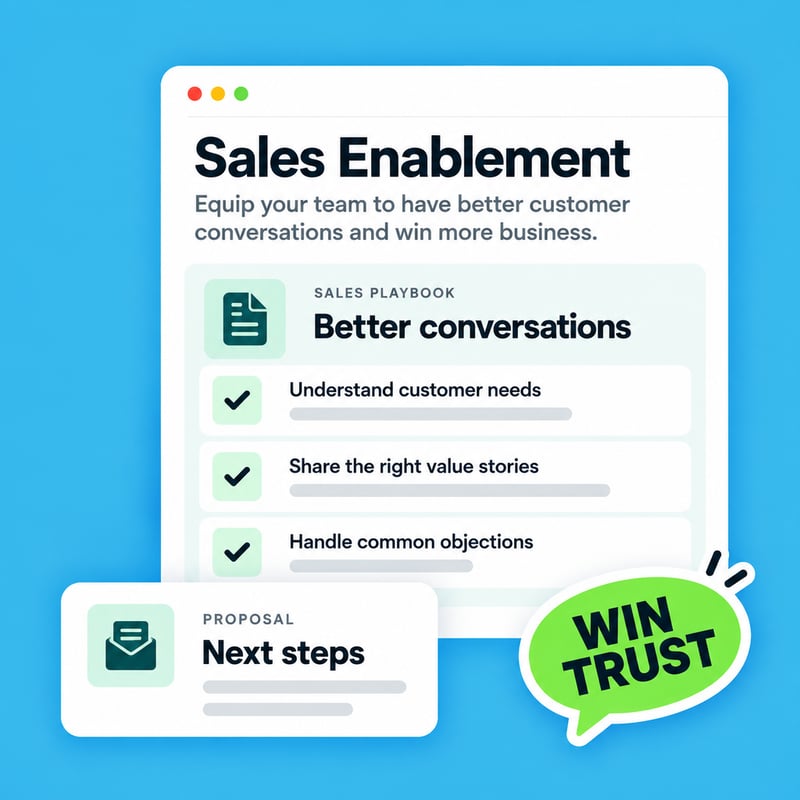
Four ways we arm your sales team
Every item here is commissioned through your plan and handcrafted by an artist, in your authentic voice. Reporting, ROI and attribution aren't sold here. They are core to the App, in every plan. Pricing is shared inside your plan.
Designed by the Artists. Credible at a glance; it looks like the operation it describes
Variants that sell. Per service line, per vertical, per campaign, from one master design
Print and digital. PDF for the follow-up email, print-ready for the table
Designed by the Artists. Every slide crafted, because the deck is evidence of the quality you're promising
The master system. A reusable deck architecture your team can tailor per deal without breaking the design
Speaker support. Notes and flow so the deck serves the presenter instead of replacing them
Battle Cards & Comparison Pages
You versus the competitor they're also talking to. Internal battle cards and published comparison pages.
What it moves: Win rate in contested deals, the most valuable deals you're already in. Most MSPs lose comparisons silently; the ones with pages and cards get to make the argument.
Objection-handling docs. The recurring objections ('you're smaller,' 'they're cheaper') answered once, well, for every rep
Published comparison pages. The honest 'you vs. them' page on your site, which is also what AI engines cite when buyers ask the comparison question
Kept current. Competitors move; cards and pages get refreshed as the Signal reports it
HubSpot Sales Training
We work directly with your sales team so HubSpot actually gets used. Sequences built together, follow-up that happens.
What it moves: Adoption and follow-up, the human half of CRM ROI. The most common revenue leak in MSP sales isn't lead flow; it's the quoted deal nobody touched for three weeks. Trained teams don't leak there.
Sequences built together. Follow-up sequences created with the team, in their voice, so they're used instead of resented
Pipeline discipline. Stages, next-steps and hygiene agreed as a team standard the manager can actually inspect
Reinforcement. A follow-up cadence so the new habits survive contact with a busy quarter
How this works with your plan
Your strategist recommends the lever when your numbers say something specific should move. You approve it with one tap in the App, and the Artists make it. Fixed scope, set turnaround, and pricing shared inside your plan.
Every piece handcrafted by an artist, in your authentic voice.
FAQs
Sales enablement, answered
They are two halves of one job. The battle card is internal, for your team in the room. The comparison page is public, and it is what AI engines cite when a buyer asks how you stack up against a named competitor.
On public pages, honestly and carefully, because the honest version is the one that gets cited and the one buyers trust. Internally, we are as direct as your team needs.
Because leads that nobody follows up are not leads. The training covers the HubSpot side: sequences, tasks and pipeline hygiene, so the work the plans generate actually gets worked.
Not sure which lever moves your number?
Your strategist will tell you. That is the job.